Showing posts with label news. Show all posts

Friday, January 21, 2011

$28m financing agreement for Block L exploration

OPERATORS of PetroleumBRUNEI's Block L, AED Oil Limited, announced that it had entered into a new US$20 million ($28 million) financing arrangement with La Jolla Cove Investors, Inc, which will be used primarily to finance Brunei costs including further exploration, well testing and phase two development activities in the onshore Block L.

AED's Executive Chairman, David Dix, in a letter to holders of nine per cent of the company's Unsecured Convertible Notes, said that the funding will provide the cash flow to meet the current budget and to fund testing of the Lempuyang-1 and Lukut-1 wells in January 2011 and further exploration and development opportunities on Block L.

Dix also stated that the funding should also give shareholders additional security regarding AED's ongoing funding position.

AED also announced that the company is in the position to commence well testing of the Lempuyang-1 and Lukut-1 this month and is looking toward the completion in March, of the acquisition of a 50 per cent operating interest in Block L in Brunei, one of Asia's most prospective hydrocarbon regions.

In regards to the company's development, Dix said that they "eagerly anticipate significant corporate developments over the next few months including commencement of Brunei's Lempuyang-1 testing in mid-January 2011, followed by the testing of Lukut-1".

On January 18, 2011, AED's Company Secretary Trevor Slater, announced in a statement that they have commenced testing operations and is targeting the completion of drilling at the Lempuyang-1 and Lukut-1 in October.

"All equipment, contractors and approvals have now been obtained and will be progressively mobilised as required," the statement said.

"The testing of the Lukut-1 well is scheduled to commence immediately following completion of the testing of Lempuyang-1 and will utilise the same testing equipment, rig and contractors," it added further.

In respect of the Lempuyang-1 testing, AED expects that, barring unforeseen circumstances, it will be in the position to make announcements to the market on January 28 and February 7 respectively.

On December 25, 2009, AED Oil entered into a binding sale and purchase agreement to acquire 100 per cent of Nations Petroleum Company and its prospective assets in Brunei.

Under the agreement, AED has paid US$3 million ($4.2 million) in cash and will issue 24 million fully paid ordinary shares to Nations.

Nations Petroleum previously held a 50 per cent interest in Block L, but with the agreement, Nations will end up with a 14.5 per cent holding in the company at the deal's completion.

The other 50 per cent of the Brunei Block L consortium is owned by Kulczyk Oil Ventures (40 per cent) and QAF Brunei with the remaining 10 per cent.

On March 11, 2010, the acquisition was successfully completed forming AED South East Asia Limited, a subsidiary of the Melbourne-based company.

The Brunei Times

Thursday, January 20, 2011

38 oil and gas sites in South China Sea to be explored soon

Chinese geologists have found 38 oil and gas basins under the South China Sea and plan to explore them this year, state media said Monday. 

The government geologists located the 38 basins in "super-thick oil and gas-bearing strata" in the northern South China Sea, the official China Daily quoted Wang Min, a vice-minister of land and resources, as saying at a national geological conference. 


For illusion only


Wang said his ministry would conduct "comprehensive geological and environmental inspections at key offshore areas" including the northern South China Sea, the southern Yellow Sea and areas near the southern Chinese island of Hainan. 

The newspaper did not give the exact location of the oil and gas deposits in the South China Sea, much of which is subject to competing claims between China, Vietnam, Malaysia, Brunei, Taiwan and the Philippines. 

China and Vietnam both increased patrols in disputed areas last year, amid regular spats over alleged incursions by fishing vessels from the two nations. 

Wang said geologists also found onshore oil and gas deposits near the Songliao Basin and the Yin'e Basin in northern China, and the Qiangtang Basin on the Qinghai-Tibet Plateau. 

They discovered natural gas hydrate for the first time in the northern South China Sea and in permafrost areas of the Qilian Mountains in north-western China, he was quoted as saying. 

"As a big developing country, we must make more efforts in exploring domestic supplies to ensure our energy security," Wang said. 


SOURCE: monstersandcritics.com

Thursday, January 6, 2011

"Nothing mysterious about $100/barrel" - Husseini


LONDON: Oil has burst above top exporter Saudi Arabia's preferred $70-$80 range and yet OPEC is unlikely to stop the rally, helping to prepare the way for the market to bound above $100 a barrel. 

At meetings this month -- a full conference of the Organisation of the Petroleum Exporting Countries in Quito and talks among Arab oil ministers in Cairo -- oil producers stood by OPEC's two-year-old set of output curbs. 

Even prices of $100 -- not far above a 26-month high of $91.88 hit this week -- need not damage the economy and would not mean OPEC should pump more if they resulted from speculation rather than any shortage, ministers and officials have said. 

"If it goes to $100 due to speculation, OPEC will not move," OPEC Secretary General Abdullah al-Badri said this month. He also said the organization did not want oil to rise that far. 

Photo courtesy of http://emerginggrowth.com/wp-content/uploads/2013/07/Oil-Pirces.jpeg


Analysts are split into those who see fundamental strength as the world economy recovers, driving up fuel consumption, and those who focus on differences between today's relatively well-supplied market and that of 2008, when oil sped to its all-time high of nearly $150 a barrel. 

"It remains to be seen whether prices are responding to short-term weather conditions or longer term demand and monetary issues," said Sadad al-Husseini, an oil analyst and former top official at Saudi state oil giant Saudi Aramco . 

"Given the still abundant oil inventories, it wouldn't make sense for OPEC to over-react on what may be a very transient condition." 


By the time any extra oil reached consumers, demand could be lower after the peak demand of the northern hemisphere winter. 

That would add to oversupply in a market, which for all the nominal strength is still in contango for U.S. crude -- a structure in which a relatively cheap front-month contract encourages stock-building. 

DEJA VU? More bullish analysts say OPEC caution recalls its action ahead of the record bull run of 2008, when it was slow to add oil. 

"The signal from the latest meeting in Quito was one in which the producers are still concerned about the downside," Barclays Capital said in a note. 

"In our view, that means that the upside is more likely to be controlled reactively with a delay rather than pre-emptively." 

It set its price forecast for U.S. crude to 2011 to $91 a barrel, adding that this average figure implied "a sustained period of trading above $100 at points during the year". 

Husseini and many inside OPEC have said dollar-denominated oil is cheaper than it seems because the dollar has fallen. 

"Prices have not yet risen to $100/barrel and there is nothing mysterious about $100/barrel," he said. "It equates to no more than $80/barrel in 2005 dollars, once current prices are corrected for inflation." 

In nominal terms, oil has risen 35 per cent from a low hit in May and this week's peak was around 15 per cent above the price at the end of 2009. 

The current rally set in around September after the U.S. Federal Reserve embarked on its latest quantitative easing, which has triggered a wave of buying across financial markets. 

Barclays noted total commodity assets under management had reached an all-time high after investors piled in. 

Data from U.S. regulator the Commodity Futures Trading Commission released this week showed money managers extended their net long crude oil positions to a record. 

"The Fed has in a sense been pushing the speculators. OPEC can very well argue it's not its role to add more oil," said Olivier Jakob of Petromatrix. 

Still oil's strength has been modest by comparison with commodities that face looming shortfalls, such as copper, which has touched a series of records. As oil began to rise in September, traders were contemplating record fuel inventories in the United States, the world's biggest oil user. 

Stocks have since fallen, although a deep draw in crude stockpiles could have been in part because of year-end tax positioning. The latest U.S. data will emerge late on Wednesday and on Thursday. 

In addition to stocks, OPEC has significant spare capacity, which it has pegged at around 6 million barrels per day. 

Iraq, which is exempt from the OPEC system of supply curbs as it recovers from war and sanctions, has huge scope to grow. 

Analysts have disputed it can meet a capacity target of 12 million bpd in around seven years, but even a slower increase would provide much of the extra oil needed to meet any rise in demand. 

Its new oil minister said it aimed to increase output to 3 million bpd by the end of 2011, up from around 2.6 million bpd. 

A Reuters poll saw the call on OPEC, as opposed to non-OPEC oil, increasing by 600,000 bpd in 2011. Overall oil use would rise by 1.5 million bpd. 

Absolute demand would hit a new high, but the rate of demand growth is slower than the record of 3 million bpd in 2004, according to figures from the International Energy Agency 

Source: http://economictimes.indiatimes.com/markets/commodities/opec-caution-on-output-may-help-bring-back-100-oil/articleshow/7186079.cms

Wednesday, January 5, 2011

Gulf of Mexico drilling to continue back

Deep water drilling may resume in the Gulf of Mexico, according to the White House’s plans, announced yesterday.
The Obama administration may give the go-ahead to for as many as 16 projects, potentially subject to additional safety rules.


The administration’s ban on drilling ended in October, but it had not approved any permits in the interim. The Wall Street Journal reported today drilling could resume in a matter of weeks.

Also today, U.K. newspaper The Daily Mail is reporting that Royal Dutch Shell (RDSa) had been pondering a takeover of BP (NYSE:BP) following the Deepwater Horizon explosion and oil spill in the Gulf of Mexico. The newspaper suggested that Shell may still make a bid.

BP shares are trading up 2.8% today, while Shell shares trade up .8%.
Chevron (NYSE:CVX) shares are trading down .2%, while Exxon Mobil (NYSE:XOM) shares trade up .3%.


Source: http://www.businessday.com.au/business/gulf-drilling-can-resume-20110104-19f23.html

AED amends 9% cinvertible note terms

AED Oil Ltd has amended the terms of a previously announced 9% convertible note issue to reflect two new put dates, July 10, 2011 and January 10, 2012, and a 10% ex-gratia reduction to the exercise price to 55c.
The changes were made ahead of significant corporate developments expected by the company over the next few months, including the start of Brunei Lempuyang 1 testing in mid January 2011, followed by the testing of Lukut 1.
Executive chairman David Dix says the introduction of new redemption dates and the ex-gratia reduction of the exercise price are in the best interests of noteholders and the company. "This step forms part of the company’s capital management program and should incentivise noteholders to continue their relationship with AED, by allowing them to participate in any upside of AED’s exciting operational developments in early 2011, while increasing funding security for AED," Mr Dix said.
The results of AED’s request to extend the expiry date for the Rombebai PSC from November 2011 until November 2014 are also expected to be known shortly. "If extended, the licence would allow AED to recommence farm-out discussions with interested parties and move to the operations phase," he said.

Tuesday, January 4, 2011

AED funding up $20m for Brunei development


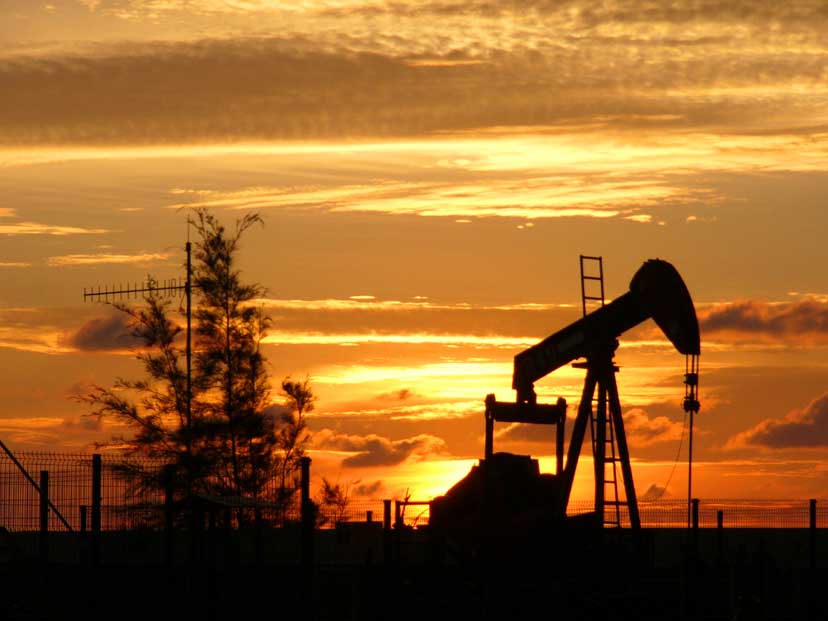
Nodding Donkey- As seen at Seria

30 December 2010 

New US$20m Convertible Note Agreement to Fund Brunei Development 

AED Oil Limited (ASX Code: AED) is pleased to announce that it has entered into a Funding Agreement for the issue of up to US$20million of 4.75% convertible notes to US- based La Jolla Cove Investors, Inc (La Jolla Cove). 

As previously announced, AED (as operator) and its joint venture partners have committed to proceeding to phase 2 on the Block L development in Brunei. The funds raised from the issue of the convertible notes to La Jolla Cove will be used primarily to finance Brunei costs including further exploration, well testing and phase 2 development activities in Brunei Block L.  Specifically, the funding will provide the cashflow necessary to fund testing of the Lempuyang-1 and Lukut-1 wells in January 2011 and further exploration and development 
opportunities on Block L. 

Phase 2 consists of a two year exploration period which commenced on 28 August, 2010. At a minimum the Block L consortium will: 

1.acquire and process at least 500 kilometres of onshore 2D seismic data and 500 kilometres of offshore 2D seismic data; 
2.acquire and process at least 150 square kilometres of offshore 3D seismic data or the dollar equivalent amount of 2D seismic data; and 
3.drill two onshore exploration wells, each to a minimum depth of 2,000 metres. 

This funding ensures that AED’s share of the current proposed work commitments and the current testing program will be fully-funded. 

AED Chairman David Dix said this outcome demonstrates International capital market interest in Brunei. The financing incorporates prudent capital management strategies, as funds will be drawn down in tranches to support AED’s work program as it moves toward achieving milestones at its flagship project in Brunei. 

“Following a rigorous due diligence program, this funding agreement demonstrates La Jolla Cove’s strong support for AED’s corporate strategy of investment in Brunei”, Mr Dix said. 

“La Jolla Cove has demonstrated a commitment to taking a significant equity stake in AED at an important time as we move into the testing and development phase in Brunei Block L,” he said. 

La Jolla Cove is a US-based private investment company. It considers itself a leader in financing small-to-mid cap publicly listed companies and seeks to partner with businesses looking for capital and strategic advice to expand their current operations. 

La Jolla Cove's expertise lies in creating flexible financial structures which enable a company to grow. La Jolla Cove undertaken a number of investment in Australian companies. This transaction marks La Jolla Cove’s most significant Australian transaction to date. “We are pleased to partner with AED Oil at this exciting time”, stated Michael Sanberg, Assistant Portfolio Manager at La Jolla Cove.     “AED’s assets in South East Asia 
show great potential and we are thrilled to be their financial partner as they move towards development.” 

Highlights of the Funding Agreement are as follows: 

•  a cash-flow profile well-matched to AED’s expected cash outlays during well testing and development of Phase 2 work program at Brunei Block L; 
•  a low cost of funds comparative to conventional debt or hybrid securities offerings; 
•  the convertible notes are unsecured with no restrictions on the raising of further prior ranking secured debt or further equally ranking unsecured debt; and 
•  in the three months prior to the maturity date of each note, AED has the right to force conversion of any unconverted principal into equity prior to redemption of the note, if doing so is seen as being in AED’s best interests at the time. 

The issue of the notes is subject to the satisfaction of certain regulatory and other closing conditions. 

The key terms of the Convertible Notes are as follows: 

1.   Four convertible notes, each with a face value of US$5,000,000, which will be issued progressively (ie, the second note will only be issued when the first note is fully drawn and so on). 
2.   US$1,500,000 will be drawn down on the issue of each notee. Subsequently, each  note will be drawn down progressively at either US$250,000 or US$500,000 per month (at AED’s option). Subject to share price performance hurdles, AED may also call for additional one-off payments of US$750,000. 
3.   The notes bear interest at the rate of 4.75%, payable on drawn commitments. 
4.   Each note will mature 3 years after the date of its issue. AED may force conversion in the period leading up to maturity. 
5.   The Convertible Notes can be converted by La Jolla Cove in whole or in part. The conversion price will be calculated as a 20% discount to the prevailing volume weighted average price of AED shares, converted into US Dollars at a pre- determined market-based exchange rate. AED may, provided certain conditions are satisfied, elect not to accept any purported conversion where the volume weighted average price of AED shares is less than the floor price (AU$0.40). 
6.   There are no restrictions on conversion of the first Convertible Note. The remaining notes cannot convert until such time as shareholder approval is obtained for the conversion. AED will seek this approval in the new year. 

The issue of the Convertible Notes will also result in minor adjustments to the conversion prices of AED’s US$21,217,500 9% convertible notes listed on SGX-ST and for AED’s 
US$20,000,000 6% convertible notes held by the Asia Resources Fund. AED will advise the market of these adjustments in due course. AED expects that the first note will be issued in early January. 

                                                                         ‐ ENDS     ‐     
Trevor Slater  
Company Secretary  


Thursday, December 30, 2010

Updates on Lempuyang-1 and Lukut-1 testing program

Kulcyzk  Oil venture has announced that the Brunei Block L Joint Venture will shortly commence a testing program at the Lempuyang-1 and Lukut-1 wells, following encouraging indications during the drilling and from the interpretation of wireline logs from both wells. In addition, KOV announces the completion of both the Block L gravity survey and a large 3D seismic survey in Block M.
Testing of the Lempuyang-1 well is expected to commence in January 2011 and will be followed by the testing of the Lukut-1 well. The testing program is designed to test two of three potential intervals in the Lempuyang-1 well, with an aggregate thickness of 56.4 metres and three of ten potential intervals in the Lukut-1 well, with an aggregate thickness of 155 metres. It may take approximately 14 days to evaluate each of the test intervals. Key components for testing, including the rig and the test equipment, have been secured.
The Lukut-1 well was drilled on Brunei Block L and suspended in mid-June pending testing by a service rig. The second Block L well, Lempuyang-1, commenced drilling operations on July 15 and was cased to total depth in early October and suspended pending testing.

Block L Airborne Gravity Survey
An airborne gravity survey covering approx. 3,000 km(2), including all of Block L, has been completed and interpretation is ongoing. Kulczyk Oil Brunei, an indirect wholly-owned subsidiary of Kulczyk Oil, has a 40% interest in Block L.
Block M 3D Seismic Program
The Belait North 3D seismic survey covers approx. 136 sq km. Field operations commenced on 3 July 2010 and data recording was completed on 20 November 2010. Restoration work and demobilization operations will continue until early December. During peak operations in October more than 1,200 people were employed on the project. The project has been completed within budget and slightly ahead of schedule. The survey area covers the northern extension of the prospective trend covered by the 118 sq km 2009 Belait 3D seismic survey. The combined 3D seismic coverage of 255 sq km covers approx. two-thirds of the Belait anticlinal trend, the major structural feature on Block M. Processing of the 3D seismic data is underway and early products are expected in March 2011. This will be followed by interpretation and mapping of the data to delineate prospects for potential drilling in 2011/2012.
KOV Borneo Limited, an indirect wholly-owned subsidiary of Kulczyk Oil, has a 36% interest in Block M.
Source: Kulczyk Oil Ventures

Monday, December 27, 2010

Murphy Oil Adds New Acreage in Brunei Darussalam

Tuesday, Dec 14, 2010,  Murphy Oil Corporation (NYSE: MUR) announced today that its wholly owned subsidiary, Canam Brunei Oil Ltd., has entered into a Production Sharing Agreement with Brunei National Petroleum Company Sendirian Berhad (PetroleumBRUNEI) for interests in offshore Block CA-2. Murphy will hold a 30% working interest in Block CA-2. Murphy currently holds a 5% working interest in Block CA-1.

“We are very pleased to expand our South East Asia portfolio with entry into Brunei Darussalam and we look forward to an active exploration program.”
David M. Wood, Murphy’s President and Chief Executive Officer, commented, “We are very pleased to expand our South East Asia portfolio with entry into Brunei Darussalam and we look forward to an active exploration program.”

World Oil Prices Shoot Up... $$$


Bandar Seri Begawan - Brunei Darussalam is all set to shoot for the stars as world oil price rockets sky-high, potentially swelling the nation's coffers.
And that is good news for the country, which has embarked on a comprehensive national development plan.
That would also help to meet the growing budget needs towards maintaining the Sultanate's welfare state status.
The population has been steadily growing, which is now inching towards the half-million mark as compared to 250,000, in the 1960s.
That means more money to maintain the countries free services, which largely depend on oil and gas exports as the mainstay.
It costs money to upkeep the free educational and medical systems going and there are umpteen subsidies both visible and hidden that keep the people happy.
There is no personal income tax and there is a large civil service where majority of the subjects are given jobs.
And now what is seen as a bonanza for Brunei is the fact that international oil price has shot up to around US$94 per barrel that will keep the country in clover.
And some people in the Sultanate are watching hopefully as the oil price relentlessly goes upwards towards the symbolic US$100 from the previous long standing rate of around US$60 per barrel.
There will now be much hope for the country to progress.
The sudden rise in oil prices seems a replay of events 30 years ago.
Before September 2003, the inflation-adjusted price of a barrel of crude oil was generally under US$25 per barrel.
During 2003, the price rose above US$30, and reached US$60 by August 11, 2005, and peaked at US$147.30 in July 2008.
Commentators at that time attributed these price increases to many factors, including reports from the United States Department of Energy and others showing a decline in petroleum reserves, worries over peak oil Middle East tension, and oil price speculation.
Now market analysts say that global oil consumption is expected to rise to a record level next year, according to the Paris-based International Energy Agency and other forecasters.
Saudi Arabian Oil Minister Ali al-Naimi said in Quito on Dec 11 that oil at US$70 to US$80 a barrel is a good price, that the market is stable and supply and demand are in balance, while Kuwaiti Oil Minister Sheikh Ahmad al-Abdullah al-Sabah said then that he was satisfied with prices near US$90.

Qatar's Oil Minister Abdullah bin Hamad al-Attiyah has said that oil around the US$80 region was best for producers and consumers. Algerian Oil Minister Youcef Yousfi said at a conference in Doha on December 1 that the market is in a "normal situation" and prices are likely to be stable for months.
Some Wall Street strategists expect prices will return to US$100 for the first time in two years during 2011 amid rising global demand, including Goldman Sachs Group Inc, Morgan Stanley, JPMorgan Chase & Co and Bank of America Merrill Lynch.
The Dow Jones industrial average and the S&P 500 index both rose Wednesday to their highest levels since July 2008 after the Commerce Department said the US economy rose in the third quarter at an annual rate of 2.6 per cent, a slight increase from its earlier estimate.
"The price of crude is highly connected to the direction of the equities markets and confidence in a global recovery," Sander Capital Advisors said in a report.
"When equities go up, it tends to mean confidence is up and thus consumption is up." -- Courtesy of Borneo Bulletin

Friday, October 15, 2010

Updates on ML-5


TOTAL E&P Borneo BV (TEPB) said it believes there is a good indication for oil and gas production at the ML-5 well in Block B within three to four years.

Yves Grosjean, general manager of TEPB, emphasised though that it is still in an early stage and might be too soon to tell.

Grosjean said: "We would say there is good indication of commerciality but it won't be immediate as it will require a new phase of development of the field."

He told The Brunei Times in a telephone interview yesterday that the time it takes just to construct and install a new platform, which is required, will take three to four years.

Total in a statement on Tuesday said that during their tests, 10 million cubic feet of gas and 220 barrels per day of condensate were produced, from a zone situated at 5,350m depth.

However, Grosjean said that the production tests they have carried out do not represent the full extent of what the well will produce during commercial production because only a limited part of the reservoir was tested.

"There is more data to be acquired for us to fully carry out the model of the field. The other data will be enough to bridge the gap to compute future production, but it's too early to say anything now," he added.

Grosjean explained that the findings from ML-5 tell of gas at high pressure conditions in the earth and contains significant amounts of liquid dissolved in it.

"Therefore, during production process, we recovered a large volume of gas but also interesting volumes of liquids which we call condensate, which is actually liquid petroleum," said Grosjean, adding that the content of the liquid is normal for a well.

He went on to say that condensate is liquids which are dissolved in the gas when it is at a pressure down in the earth.

"So when we produce this gas, which is rich in liquids during the process, we can extract the liquid and this process is condensation. Just as steam condensates to become water," he explained.

On Tuesday, Total's statement said that the ML-5 well, the deepest ever drilled in Brunei, located offshore in Block B.

It discovered gas with condensate in High Pressure/High Temperature formations (HP/HT), with a total vertical depth of 5,664m.

"It is a beauty to be producing at such great depth and pressure and it is indeed (where) you normally find gasses which are rich in liquids," said Grosjean.

Total claims this is the deepest successful test in Southeast Asia and the gross thickness of hydro-carbon bearing formation exceeds 800m.

The ML-5 well is the third positive well of an exploration campaign which started in 2007, targeting the deep HP/HT horizons of the Maharaja Lela structure.

"The development of the new resources and production through the existing facilities is currently being studied," said Total.

Total operates the Maharaja Lela/Jamalulalam field with a 37.5 per cent interest. Its average production of gas and condensate was more than 28,000 barrels of oil equivalent per day last year. The Brunei Times

Wednesday, October 13, 2010

New gas, condensate discovery in Block B


Thursday, October 14, 2010
TOTAL E&P Borneo has announced a "significant" new gas and condensate discovery in the ML-5 well, the deepest ever drilled in Brunei, located offshore in Block B, Total said yesterday.

In a press statement late last night, French oil and gas company Total said the ML-5 well, located in a water depth of 65m and around 50km from the coastline, was drilled eight km to the south of the Maharaja Lela/Jamalulalam field in a new, deep fault panel.

It discovered gas with condensate in High Pressure/High Temperature formations (HP/HT). With a total vertical depth of 5,664m, the well is the deepest ever drilled in Brunei, said Total.

During tests, 10 million cubic feet of gas and 220 barrels per day of condensate were produced, from a zone situated at 5,350m depth.

Total claims that this is the deepest successful test in Southeast Asia.

The gross thickness of the hydrocarbon bearing formation exceeds 800m, it said.

The ML-5 well is the third positive well of an exploration campaign which started in 2007, targeting the deep HP/HT horizons of the Maharaja Lela structure.

The development of the new resources and production through the existing facilities is currently being studied, Total said.

Total operates the Maharaja Lela/Jamalulalam field, located in Block B with a 37.5 per cent interest. Its average production of gas and condensate was more than 28,000 barrels of oil equivalent per day last year. The French company also announced that it would resume its explorations in Block CA-1, following the Deed of Amendment signed, with a 54 per cent interest.

The Brunei Times

Saturday, October 9, 2010

Block L Exploration Well Reaches Final Depth

Updated

Calgary, Alberta - Kulczyk Oil Ventures Inc advised that the Lempuyang-1 exploration well in Block L, onshore Brunei Darussalam has reached a final total depth ("TD") of 3,220 metres measured depth from rotary table ("MDRT") (2,817 metres true vertical depth), according to Marketwrire.


The preliminary interpretation of the wireline logs suggests gas charged reservoirs may have been encountered in three target horizons.
The drilling and wireline logging of the Lempuyang-1 well is now complete and a 4.5" liner is being set to total depth in preparation for the 'possible testing of the well.
The TD was set above the original proposed depth of 3,500 metres MDRT because of drilling challenges associated with managing overpressures in the well.
Overpressure was expected and accounted for in the original well design.
However, several significant gas kicks encountered while drilling meant that the design needed to be modified to suit the conditions in the wellbore.
Three of the four target horizons in the wellbore were fully penetrated and assessed by the well. However, only the upper part of the lowest horizon (Green) was intersected.
The preliminary interpretation of the wireline logs indicates possible gas-charged reservoirs at each of the three lowest target horizons.
The Lempuyang prospect comprises five fault blocks with up to five target horizons in each block. A 3-D seismic data acquired in May 2009 indicated seismic amplitude anomalies which appeared to correspond to the target zones. Lempuyang-1 was designed to intersect four of the five seismic horizons.
The operator has advised that they intend to proceed to a testing programme and are optimistic about the commerciality of the prospect.
However, Kulczyk Oil has yet to reach a similar conclusion as it is still reviewing the well data and believes that a decision as to whether or not the Lempuyang prospect can be commercially developed can only be reached after both testing and further drilling.
The partners in Brunei Block L and in the Lempuyang-1 well are Kulczyk Oil Brunei Limited (40 per cent), AED South East Asia Limited (50 per cent) and QAF Brunei Sdn Bhd (10 per cent).
Kulczyk Oil also owns an interest in Block M, the other onshore exploration block in Brunei, through KOV Borneo Limited, an indirect wholly-owned subsidiary of Kulczyk Oil, which has a 36 per cent interest in Block M and in each of the Mawar-1 and Markisa-1 wells.
Kulczyk Oil is an international upstream oil and gas exploration company with a diversified portfolio of projects in Brunei, Syria and Ukraine and with a risk profile ranging from exploration in Brunei and Syria to production and development in Ukraine.
In Brunei, KOV owns working interests in two production sharing agreements which gives the company the right to explore for and produce oil and natural gas from Block L and Block M.
KOV owns a 40 per cent working interest in Block L, a 2,220 square kilometre (550,000 acre) area covering onshore and offshore areas in northern Brunei and a 36 per cent working interest in Block M, a 3,011 square kilometre (744,000 acre) area onshore in southern Brunei. -- Courtesy of Borneo Bulletin

Friday, October 8, 2010

Petrol pumps meter cheating...


MOTORISTS are complaining about rampant cheating at some petrol stations.

They said cheatings still occur even though filling stations put up notices advising customers to monitor the meter while attendants pump petrol into their tanks.

Recently, a motorist who declined to be identified, filled her salon car with half tank of petrol during daytime which usually costs her between $18 and $20. While the pump nozzle was stuck in the tank, the consumer continued, the counter did not reach zero and she ended up paying $25.

"The car before mine pumped $5 fuel, as seen on the meter. Without resetting the fuel pump, the attendant started pumping fuel and the meter jumped to $6.50 within two seconds and I only managed to stop it when the attendant pumped up to $10," said the motorist.

The woman said that the modus operandi that the attendant used was to ask the driver to move the car forward to make way for an incoming car. By doing so, the attendant blocks the driver's view of the meter, while the pump is running.

Such practice, according to the motorist, occurred in Telisai, Jerudong and Gadong, after discussing it with friends on online social networks.

Nasehin Yahya, manager of a petrol station in Gadong, said yesterday he was aware of consumers complaining about the petrol pump's meter cheating, although none of the incidents have been reported at his station.

"It is better for customers to report directly to the gas station (supervisor) if there is any incident that upset them, so the matter will be resolved immediately," Nasehin told The Brunei Times.

He said that if such incident ever occurred, the company will conduct an investigation. "However, if we found that our staff were being dishonest or cheating the customers, we will immediately terminate them," he said.

Nasehin added that all his staff were prohibited from practising such dishonest behaviour. "We told them that the company knows all possible tricks, so don't try one."

He explained that every night when the staff do the sales calculation, they have to make sure that the amount of outgoing petrol tallies with the money received.

To provide its best service for the customers, the station is required to follow the general rules known as "the eight steps".

The steps are: greetings: ask the customers what type of service or product they need; apply safety standards which include requesting customers to present container approval, switch off cellular phone and no smoking in the premises; collect the payment; inform the customers about promotion products; and remind motorists to drive safely.

A supervisor of another gas station in Bandar area who refused to be named said that any employee found cheating the customers will be immediately terminated. "This will not need any prior warning because we will take strict action of terminating our staff who have cheated at the gas pump," the supervisor said.

He added that every day, a routine check must be done before the gas station opens for business. The check list consists of making sure that all dispensers are functioning; dispenser, nozzle, handles, hoses and splash guards clean and undamaged.

Both of them said that sometimes they found that in the case of an old type of car, it will need some time for the petrol to fill the tank. Some motorists even complained that the amount of petrol did not match the amounts paid, but in actuality, it takes some time for the gas to fill the tank, they explained.

The Brunei Times

P/S : It was reported the incident happened in several petrol station in  the country, Is it true that the staffs are cheating? or it happened due to some machine error- could be due to new machines were installed in these stations... 

This incident remind me of a theory of Refilling your Oil Tank, some people believe that, you get more petrol a.k.a paying less for petrol if you buy it early in the morning. 
This theory is based on that, when the temperature is low (in the morning), the oil contract, and since oil is calculated by volume, you get more oil for the same price. 


Logically the theory should works but I am not sure either it really happens. How about if the station heated up the oil by certain degree, then you ll get less oil a.k.a you pay higher... :)

Thursday, October 7, 2010

Block M Well Shows ‘Better Than Expected' Sand Quality

Kuala Belait - Markisa -1 exploration well in Block M, the largest onshore project in Brunei Darussalam, has started to yield optimistic results.

According to Marketwire, drilling, which began on September 26 this year, it has reached an intermediate depth of 987 metres where engineers have discovered "better than expected" sand quality in the lower langsat upper sand section, whilst preliminary interpretation of wireline, pressure as well as sampling data suggest that some "good quality reservoir" has been intersected.
Data collected on two of the shallower objectives that have already been logged also suggest the presence of low saturation hydrocarbons with sands appearing to be "water wet".
The chief executive of Tap, Peter Stickland, said that the combination of both the condition of the reservoir quality and the presence of low saturation hydrocarbons indicates "further opportunities" for the said objectives.
"These shallow Markisa-1 results will now be incorporated into our geologic of the Belait region to better define future drilling opportunities," he said and is looking forward to deeper drilling, which will commence within the next four to five days.
The Markisa-1 exploratory well that has been programmed to reach a well depth of 1,335 metres, is the second of a minimum of three wells to be drilled in Block M during Phase 1 exploration period that will end in August 2011.
It will also be used to evaluate several secondary targets within the Miocene Belait Formation and is expected to intersect the main Belait thrust fault.
The partners for Block M include operator Tap Energy (Borneo) with 39 per cent, Kulczky Oil Ventures with 36 per cent, China Sino Oil Company with 21 per cent and Jana Corporation with four per cent.
Kulczyk Oil also owns an interest in Block L, the other onshore exploration block in Brunei, through Kulczyk Oil Brunei Limited, an indirect wholly-owned subsidiary of Kulczyk Oil, which has a 40 per cent interest in Block L and in each of the Lukut-1 and Lempuyang-1 wells.
The first well, Lukut-1, was drilled on Brunei Block L and suspended in mid-June pending testing by a service rig. A second Block L well, Lempuyang-1, commenced drilling operations on July 15 and is currently logging. -- Courtesy of Borneo Bulletin

Tuesday, October 5, 2010

Another Oil Exploration


Sep 27, 2010 06:21 ET

Kulczyk Oil Participating In Fourth Brunei Exploration Well

CALGARY, ALBERTA--(Marketwire - Sept. 27, 2010) - Kulczyk Oil Ventures Inc. ("Kulczyk Oil" or "KOV") (WARSAW:KOV) announces that the Markisa-1 well on Block M in Brunei Darussalam has commenced drilling. Markisa-1 is the second well to be drilled on Block M during 2010 by Kulczyk Oil and its joint venture partners. The first well on Block M, Mawar-1, was cased to total depth in mid-September and suspended pending testing.
The Markisa prospect was identified on the 3D seismic data acquired by the joint venture in 2009. The prospect is a separate undrilled fault compartment identified within the greater Belait Anticline. Given the drilling history within the Belait trend, the Markisa-1 well is considered to be low-to- moderate risk.
Markisa-1 is being drilled as a deviated well to test a sandstone reservoir that produced oil in the 1920's and early 1930s in an adjacent fault block. The well will also evaluate several secondary targets within the Miocene Belait Formation and is expected to intersect the main Belait thrust fault. The well is designed to a total depth of approximately 1,335 metres.
The well is being drilled by the MB Century Rig 104 and is expected to take approximately 28 days to drill and evaluate on a trouble free basis. In the case of a discovery, the well is likely to be suspended pending testing by another rig designed for that purpose. The well is located 30 kilometres south of the giant Seria oil field and the facilities in that area which include an oil refinery and terminal and the Brunei liquefied natural gas (LNG) facility.
The partners in Brunei Block M and in the Markisa-1 well are KOV Borneo Limited (36%), Tap Energy (Borneo) Pty Ltd (39%), China Sino Oil Co. Ltd. (21%) and Jana Corporation Sdn Bhd (4%). KOV Borneo Limited is an indirect wholly-owned subsidiary of Kulczyk Oil. The Markisa-1 exploratory well is the second of a minimum of three wells to be drilled on Block M by Kulczyk Oil and its joint venture partners in Block M during the Phase 1 exploration period ending in August 2011.
Kulczyk Oil Brunei Limited, another indirect wholly-owned subsidiary of Kulczyk Oil, has a 40% interest in Block L to the north of Block M. The first well on Block L, Lukut-1, was drilled to total depth and suspended in mid-June pending testing by a service rig. A second Block L well, Lempuyang-1, commenced drilling operations on July 15 and is currently drilling.

Wednesday, September 29, 2010

Modern Oil Well service Facilities


Anduki, Belait - Minh's petroleum industry celebrated yesterday the opening of the QESS Well Services Facility and QESS Wire Wrapped Screen Facility, touted to be two of the most modern integrated well service facilities in Southeast Asia.
Present to officiate at the opening of the facilities at the Bina Light Industrial Area in Sungai Bera Industrial Park was Minister of Industry and Primary Resources Pehin Orang Kaya Seri Utama Dato Seri Setia Hj Yahya Begawan Mudim Dato Paduka Hj Bakar.
QESS Energy Support Services Sdn Bhd, incorporated in Brunei in 2003, is a locally-owned company that provides oil and gas support services like wire wrap screen, fabrication, onshore and offshore engineering services, and engineering maintenance. Wire wrap screen is a type of screen used in sand control applications.
In his opening speech, Hj Awang Hj Ali, managing director of QESS, said he hopes oil companies will continue to support local companies like QESS and provide long-term contracts to them.
After the opening ceremonies at both facilities, Pehin Dato Hj Yahya was given a tour of both plants where staff of QESS explained to the minister the -detailed operations of the company.
During the tour, the minister was showed the real-time remote operating centre, a place that shows data on activities of the rigs under Halliburton Energy Services.
Ting Heng Hie, Halliburton's business development manager in Brunei, said the centre is not just like the blackbox of an airplane - recording and monitoring all the activities happening in the rigs, but is also able to perform "remote control" of activities at the rig itself.
"We're just beginning to put this technology into use, and now we're only using its monitoring capability," Ting told reporters.
"When this operation centre matures further, we can even use it to do calibration of our oil rigs," added the business development manager.
Ting said the centre is the first of its kind in Brunei, and is also one of the most advanced operation centres in the region in terms of technology.
After touring the facility, Pehin Dato Hj Yahya witnessed the signing of a partnership contract between QESS managing director Hj Awang and Halliburton's area vice president Rao Abdullah.
Also present at the ceremonies was Llewellyn Hedgbeth, Charge d'Affaires of the United States Embassy in Brunei. -- Courtesy of The Brunei Times
[Chua Guan Cheong]